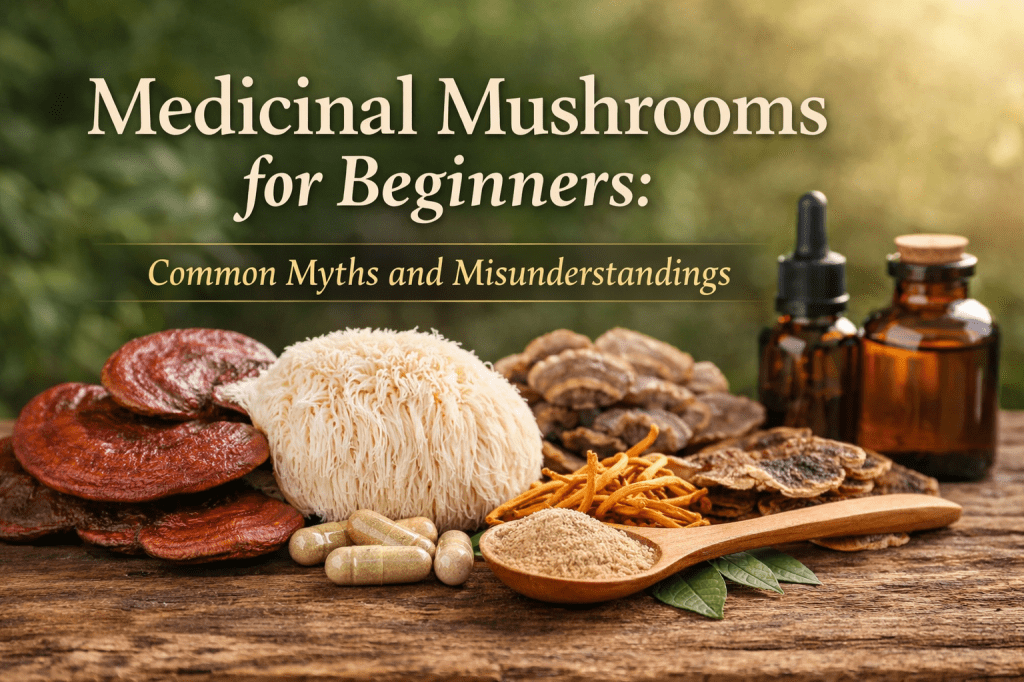
Interest in medicinal mushrooms has grown steadily in recent years, especially among older adults looking for natural ways to support overall wellness. Along with this interest has come a flood of information online — some helpful, some confusing, and some misleading.
Many beginners encounter bold claims, dramatic testimonials, and promises of quick results. This can make it difficult to know what to believe or where to start. Medicinal mushrooms are often discussed as powerful tools, but they are frequently misunderstood.
This article is written for beginners who want clear, realistic information. It takes a calm look at some of the most common myths and misunderstandings surrounding medicinal mushrooms, with a focus on safety, quality, and thoughtful use. The goal is not to discourage curiosity, but to support informed decisions and realistic expectations.
❌ Myth 1: Medicinal Mushrooms Are Miracle Cures
It’s common to see medicinal mushrooms described online as powerful solutions for everything from memory loss to chronic illness. Headlines and testimonials sometimes suggest that a single mushroom can dramatically change health outcomes on its own.
The reality is more measured. Medicinal mushrooms are best understood as supportive tools, not miracle cures. They have a long history of traditional use, and modern research continues to explore their potential benefits, but they are not treatments or replacements for medical care.
For older adults especially, it’s important to keep expectations realistic. Health is influenced by many factors, including nutrition, physical activity, sleep, stress, and medical care. No supplement — natural or otherwise — can replace these foundations.
Some people do notice subtle benefits over time when using medicinal mushrooms as part of a balanced lifestyle. Others may notice little or no change. Both experiences are normal.
Approaching medicinal mushrooms with curiosity rather than expectation helps prevent disappointment and encourages thoughtful, informed use.
❌ Myth 2: If a Little Is Good, More Must Be Better
When people first begin exploring supplements, it’s easy to assume that taking a larger amount will lead to faster or stronger results. This belief is common with vitamins, herbs, and medicinal mushrooms alike.
In reality, more is not always better — and in some cases, it can be counterproductive. Many medicinal mushrooms are intended to be taken in modest amounts over time. Taking too much too quickly may increase the chance of unwanted side effects, such as digestive discomfort, headaches, or feeling “off.”
For older adults, this is especially important. As we age, our bodies may process supplements differently, and sensitivity to dosage can increase. What feels mild for one person may feel overwhelming for another.
A safer approach is to start low and go slow. Beginning with a small amount allows you to observe how your body responds before making any adjustments. If a supplement feels helpful, consistency over time is often more important than quantity.
Listening to your body and respecting its signals is one of the most reliable ways to approach medicinal mushrooms thoughtfully.
❌ Myth 3: “Natural” Means Completely Safe
Because medicinal mushrooms come from nature, they are often assumed to be harmless. While many people tolerate them well, natural does not automatically mean risk-free.
Medicinal mushrooms contain active compounds that can affect the body in subtle ways. For some individuals, this may include digestive upset, allergic reactions, or sensitivity when taken alongside certain medications. This is especially relevant for older adults, who are more likely to be managing health conditions or prescriptions.
Another important consideration is individual response. Two people can take the same mushroom supplement and have very different experiences. What feels gentle and supportive for one person may feel uncomfortable for another.
This doesn’t mean medicinal mushrooms should be avoided — it means they should be approached thoughtfully. Reading labels carefully, starting with small amounts, and paying attention to how your body responds are simple but important steps.
When in doubt, discussing new supplements with a healthcare provider can help reduce risk and support safer decision-making.
❌ Myth 4: All Mushroom Supplements Are the Same
At first glance, many mushroom supplements look similar. Labels often use the same buzzwords, and prices can vary widely. This can lead beginners to assume that all mushroom products offer roughly the same quality and benefits.
In reality, how a mushroom supplement is made matters a great deal.
One key difference is whether a product uses the fruiting body of the mushroom or mycelium grown on grain. The fruiting body is the visible part of the mushroom and is traditionally used in cooking and herbal preparations. Mycelium is the underground root-like network. Some products contain mostly grain-based mycelium, which may offer different properties than the fruiting body itself.
Quality also depends on sourcing, processing, and transparency. Reputable products clearly list the mushroom species used, the part of the mushroom included, and avoid unnecessary fillers or vague ingredient descriptions.
Third-party testing, when available, can offer additional reassurance that a product contains what the label claims and is free from certain contaminants.
For beginners, choosing a simple, clearly labeled product from a trusted source can make a meaningful difference and reduce confusion.
❌ Myth 5: You Need to Take Many Mushrooms at Once
With so many medicinal mushrooms discussed online, beginners may feel pressure to try several at the same time. Blends and “stacks” are often marketed as more effective, which can create the impression that using multiple mushrooms is necessary to see any benefit.
In reality, starting with one mushroom at a time is usually the best approach, especially for beginners and older adults. This makes it easier to notice how your body responds and to identify what feels helpful — or what doesn’t.
Taking multiple mushrooms at once can make it harder to tell which one is causing an effect, whether positive or negative. It can also increase the chance of digestive discomfort or sensitivity.
Beginning with a single, well-understood mushroom allows you to learn at a comfortable pace. Over time, if you choose to explore others, you’ll have a clearer sense of how your body reacts and what fits best into your routine.
There is no rush. Medicinal mushrooms are meant to support wellness gradually, not overwhelm it.
❌ Myth 6: Benefits Should Be Immediate and Dramatic
It’s easy to expect noticeable results right away, especially when reading testimonials or marketing claims that describe quick and dramatic changes. For beginners, this can create unrealistic expectations about how medicinal mushrooms work.
In most cases, any benefits from medicinal mushrooms tend to be subtle and gradual, if they appear at all. These mushrooms are often used to support the body over time rather than to produce immediate, noticeable effects. Some people may feel small changes in focus, energy, or overall well-being after consistent use, while others may not notice anything specific.
This is especially true for older adults. The body’s responses can be slower and more nuanced, and improvements may blend into overall wellness rather than stand out as a clear “before and after” difference.
It’s also important to remember that not everyone responds the same way. A lack of dramatic results does not mean a product is ineffective, nor does it mean it’s necessary to increase the dose or add more supplements.
Approaching medicinal mushrooms with patience and realistic expectations helps prevent frustration and supports a more thoughtful, long-term perspective on wellness.
What Older Adults Should Keep in Mind
As we get older, our bodies often respond differently to foods, supplements, and lifestyle changes. This doesn’t mean medicinal mushrooms are off-limits, but it does mean they should be approached with extra care and attention.
One important consideration is individual sensitivity. Older adults may notice effects more quickly — or experience discomfort at lower amounts — than younger users. Starting with a small amount and allowing time to observe how your body responds can help reduce unnecessary side effects.
Medications are another key factor. Many older adults take one or more prescriptions, and while medicinal mushrooms are generally considered gentle, interactions are possible. This makes it especially important to review supplement use with a healthcare provider who understands your personal health history.
It’s also helpful to remember that wellness changes often happen gradually. Improvements in how you feel may be subtle and easy to overlook, especially when they occur alongside other healthy habits like improved nutrition, movement, or sleep.
Above all, there is no need to rush. Taking a patient, thoughtful approach allows you to learn what works best for your body and supports safer, more confident decision-making over time.
Safety and Common Sense
Medicinal mushrooms are often described as gentle, but safety still matters — especially for beginners and older adults. Taking a thoughtful approach helps reduce risk and supports better long-term decisions.
Before adding medicinal mushrooms to your routine, it’s wise to speak with a healthcare provider, particularly if you take prescription medications, manage a chronic condition, or have a history of allergies. This step helps ensure that supplements fit safely into your overall health plan.
Reading labels carefully is another important habit. Choose products that clearly list the mushroom species, the part of the mushroom used, and recommended serving sizes. Avoid products with vague ingredient descriptions or unnecessary fillers when possible.
Pay attention to how your body responds. If you notice digestive discomfort, headaches, skin reactions, or any feeling that something isn’t right, it’s best to stop and reassess. Discontinuing a supplement is always an option, and listening to your body is more important than pushing through discomfort.
Finally, remember that medicinal mushrooms are supplements, not medical treatments. They are best used as part of a broader approach to wellness that includes nutrition, movement, sleep, and professional medical care.
Closing Thoughts
Medicinal mushrooms can be an interesting area to explore, especially for those interested in natural approaches to wellness. At the same time, they are often surrounded by confusion, exaggerated claims, and unrealistic expectations.
Understanding common myths and misunderstandings is an important first step. Learning what medicinal mushrooms can — and cannot — reasonably offer helps set a foundation for safer, more confident choices.
There is no need to rush or try everything at once. For many people, the most helpful approach is slow, simple, and informed. Curiosity paired with caution allows space to learn while respecting individual health needs.
Ultimately, medicinal mushrooms are just one small part of a much larger picture. Long-term well-being is shaped by daily habits, meaningful activity, supportive relationships, and thoughtful care over time.
 Silver Winder – Medicinal Mushrooms for Beginners
Leave a comment